“It's Your Age,” Mum's GP Said. I'm a Health Writer. I Spent Four Months Finding Out What It Really Was.
Her weight hadn't changed in years, yet her waistband was digging in by six o'clock and every test came back normal. What I found sits under a layer one stool sample isn't built to see. It explains why so many women over 60 hear the same three words, and what finally settled Mum's evenings.
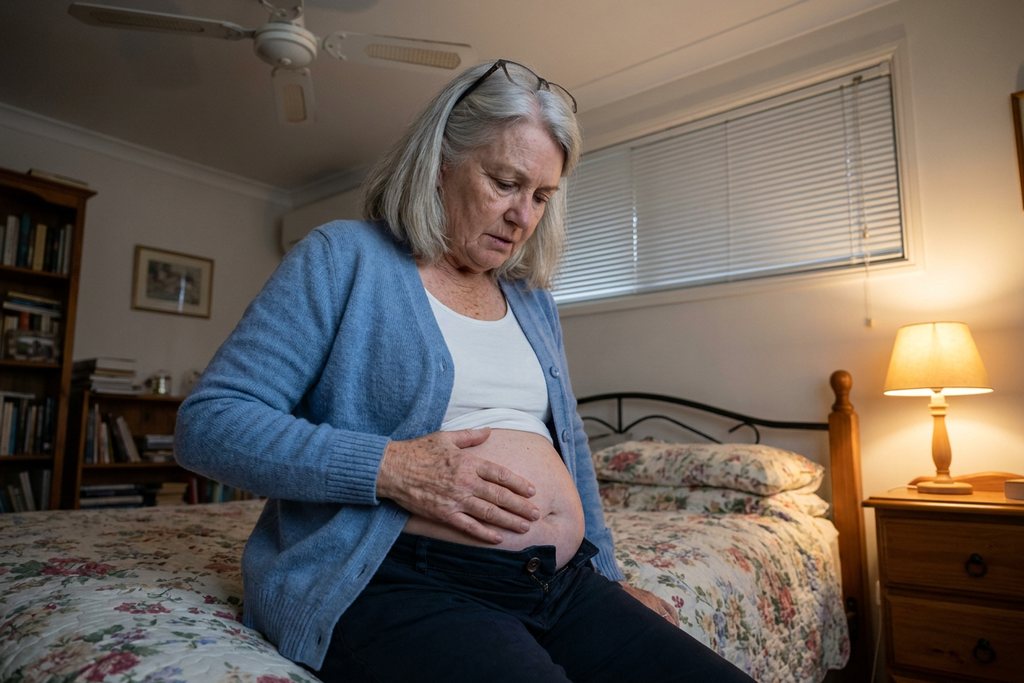
If you're 60 or older, and the number on the scales has hardly changed in years while your waistline keeps creeping out.
If your pants are digging in by six o'clock, and the first thing you do at home is swap them for an elastic waist.
If every test came back normal, and you still knew something wasn't right.
Then you've probably heard the three words my mother heard four times in two years: “It's your age.”
I've written about health and consumer affairs for Australian readers for 21 years. I'm not a doctor. My job is to read the fine print, check the studies and ask the question twice.
In two years, I never once asked it about my own mum.
This is what I found when I finally did. It explains the swelling, the evenings and the normal results. And it was never her age.
She Did Everything Right. Her Waistline Grew for Two Years Anyway.
Mum is 67. Thirty-one years running the library at a primary school in Bendigo, a nan of four, and the most sensible eater I know.
She walks every morning. She eats less than she did at 50. The scales read exactly what they read the week she retired.
Her waistline grew anyway. By dinner she looked like she was expecting. By bedtime the button was undone under the table.
She saw her GP four times. A blood test, a stool test, then a referral for a colonoscopy. All clear.
The first time, he blamed her age. The second time, menopause. “At 67,” she said. The third time, he handed her a leaflet on IBS.
The fourth time she drove home, sat in the car in the driveway and rang me. “Leanne, I'm not making this up, am I?”
I didn't have an answer for her. So I did what I do for a living. I started reading.
Ten Minutes, Bulk-Billed: Why Mum's Tests Kept Coming Back Normal
Mum's GP isn't a bad doctor. He has ten minutes per patient and a waiting room that never empties. Ten minutes allows a blood test, a stool test and, eventually, a referral.
She wasn't the only one sent home that way. One Australian woman described the moment her own GP gave his verdict:
“he said, ‘You're female, you're middle-aged, it's menopause’ and started typing his notes.”
A woman in Australia, describing her GP appointment
This is what I learned about the tests Mum had.
A stool test is one sample, from one morning. A few grams in a jar. Laboratories know one sample can miss what they're looking for: the laboratory guidance of the US Centers for Disease Control and Prevention says that, if possible, three specimens collected two to three days apart should be examined.1 Mum gave one.
It shows what has been passed, not what is holding on. Anything anchored to the bowel lining, beneath its mucus layer, isn't in the jar.
A colonoscopy isn't a parasite test. It is there to look for polyps, cancer and inflammation.
A normal result told Mum there was nothing in that jar, that morning. It never told her there was nothing there.
None of this is a reason to skip your GP. Keep every appointment. It is a reason to ask one more question.
The Scales Stay Put, the Waistline Doesn't: Women Told Me the Same Story
Once I started asking, I found Mum's story everywhere. Not in medical journals, but in the places women talk to each other. None of these women was writing about any product. They were describing the problem, in their own words.
“His recommendation of ‘eat less, move more’ was not useful and downright offensive as far as I'm concerned. I'm not an unintelligent woman (of which I reminded him)”
A woman of 70, on an Australian website for over-60s
“I should have a flat stomach because a CT scan for another reason shows that I only have a very thin layer of fat on my abdomen because of my healthy eating.”
A woman in Australia, on a patient forum
“I used to hate elastic waistbands but now can see the logic. My advice though is to keep them hidden at all times.”
A woman of 68, on an Australian website for over-60s
Mum had stopped wearing her good belt. She had started finding reasons to take the photos instead of being in them.
Some of these women had been told it was in their head, or their own fault. It wasn't. They knew something was wrong long before anyone listened.
What I Found: They Take Their Share of Every Meal First
I spent the next four months reading: parasitology papers, veterinary trials, laboratory guidance, and the forums where people describe what they have seen.
Here is the piece nobody had given Mum. Intestinal worms anchor themselves in the bowel lining and shelter beneath its layer of mucus. And they take their share of every meal first.
However little Mum ate, they were fed first. What was left fermented. The swelling grew a little more each evening, until it stopped settling at all. That's swelling, not weight. It's why her scales never moved while her waistline did.
It explained her nights, too. A reader of 78 put it in a single line:
“The last two months I've been experiencing bloating and have so much gas, particularly of a night when I lay down.”
A woman of 78, in a letter to an Australian website for over-60s
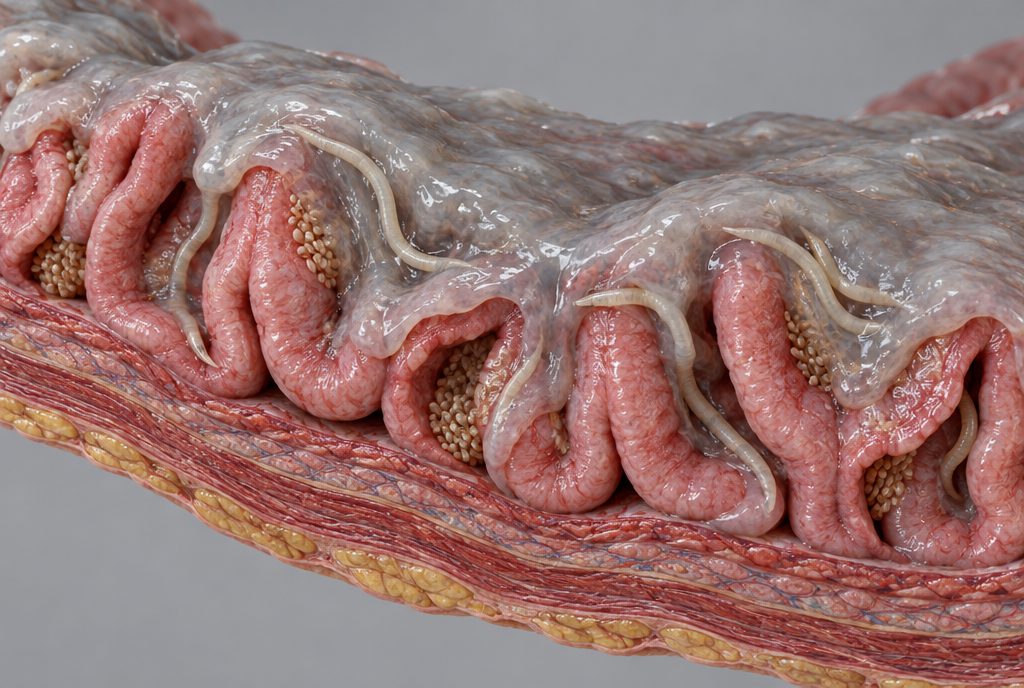
Let me say it the way nobody said it to Mum. Age, menopause and IBS were never the whole story. For her, something in the bowel lining was being fed before she was. And it could be cleared.
Clean, Careful Women Carry Them Too
Mum's first reaction was mine: “Worms? Me? I'm clean. I'd know.”
It has nothing to do with being clean. The eggs are smaller than a grain of salt. They're on the salad you washed, the dog asleep on your bed, the grandkids' hands, the buffet on the cruise.
Plenty of women never get the itch. One Australian woman wrote exactly what Mum had been thinking:
“I sometimes think that perhaps a deworming tablet might solve the bloating problem but I don't have the usual signs.”
A woman in Australia, on a patient forum
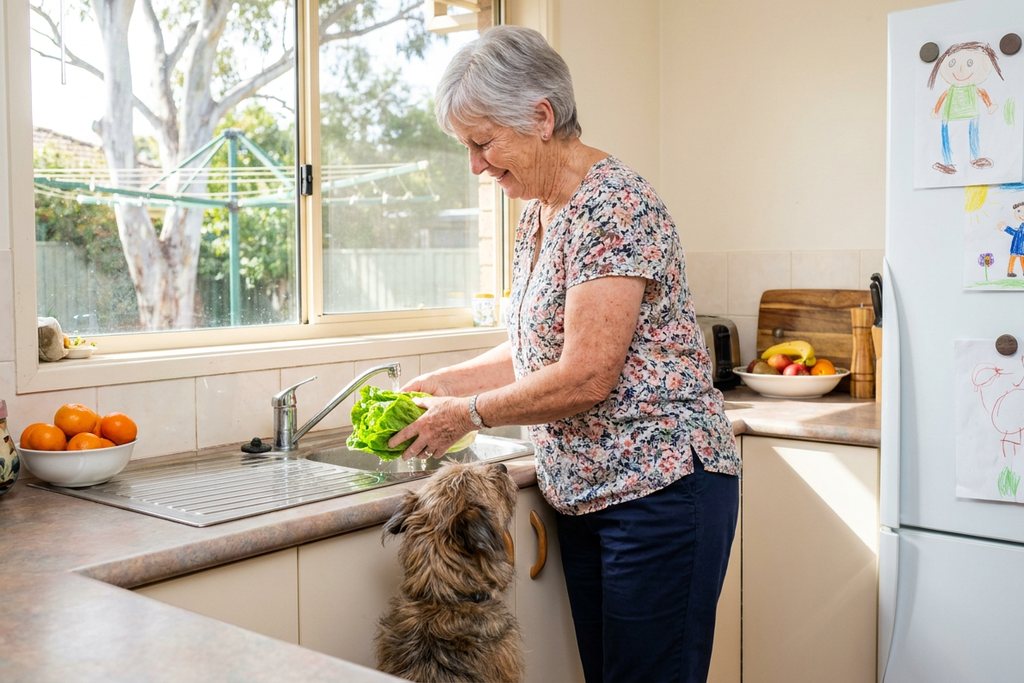
You didn't do anything wrong. You ate.
What Mum Tried, and What Each One Was Made to Do
In two years, Mum tried most of what's on the chemist shelf. None of it was a waste for the job it was made for. It just wasn't made for this.
Peppermint oil and the IBS leaflet. Made to ease cramping. Neither was ever meant to reach anything in the lining.
Wind and spasm remedies. Made to settle the wind and the spasms for the afternoon. Not to touch what was being fed first.
Probiotics and fibre drinks. They add good bacteria and bulk. They don't remove what is already anchored there.
Low FODMAP, and cutting out the bread and the wine. Less food for Mum. Whatever was fed first still took its share of what she did eat.
A two-week, single-herb cleanse from a health food shop. One plant, for fourteen days. The eggs hatch in waves beneath that mucus layer, and the last ones take until late in the third week. Stop on day fourteen and the ones still hatching can restart the cycle.
None of that was Mum's fault. She was treating the problem she had been told she had.
Three Herbs, One Softgel, Thirty Mornings: What the Studies Show
Most of the research on these plants was done in animals and in the laboratory, and I'll be straight with you about that. Here is what it shows.
Wormwood works on the mucus layer itself. In a trial on infected sheep, published by Tariq and colleagues at the University of Kashmir in Veterinary Parasitology in 2009, a wormwood extract cut worm egg counts by 90% within 15 days, as effectively as albendazole, a prescription worming medicine.2 In mice infected with the dwarf tapeworm, a worm that also infects people, a study by Beshay at Menoufia University in Egypt found wormwood extract “promising and comparable” to praziquantel, though praziquantel still did best (Journal of Helminthology, 2018).3
Black walnut hull turns the bowel lining into hostile ground, so they can't hold on.
Clove targets the eggs. In a laboratory test by Pessoa and colleagues in Brazil (Veterinary Parasitology, 2002), eugenol, the compound that gives clove its smell, stopped the eggs of a sheep worm from hatching.4
Around fifteen supporting botanicals go in with them.
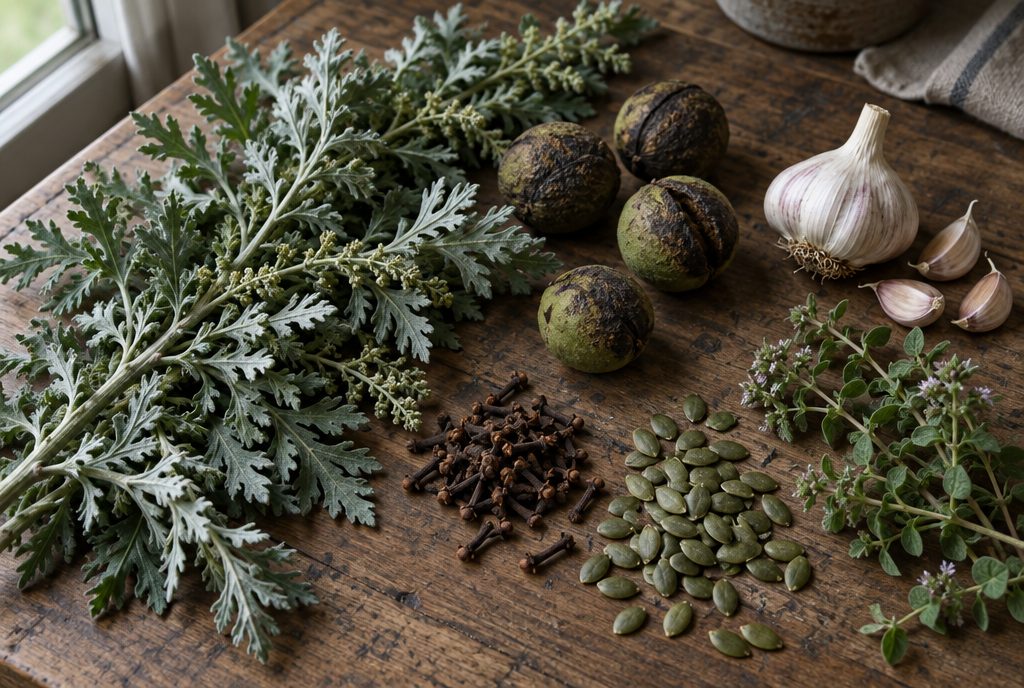
One herb, at a small dose, for two weeks, was never going to do all of that. Three together, at a real dose, for thirty mornings, are built to work on the layer, the lining and the eggs, then outlast the last hatching.
Five Questions I'd Ask of Any Cleanse
By month three, I had a checklist. It's the one I'd use on any cleanse, for anyone I love.
- A combination, not a single herb.
- A dose printed on the front.
- In an oil, not a powder.
- Thirty days, not fourteen. Long enough to get past the last hatching, around the three-week mark.
- A guarantee you can use, and no subscription.
When I read the list out to Mum, she went to the pantry. A friend from her walking group had dropped off a pouch months earlier, and it had sat there unopened. It was called PURAVA.
I checked it against my five questions, the way I'd check anything:
- A combination? Yes. Wormwood, black walnut hull and clove, all three in each softgel.
- A dose on the front? Yes. The equivalent of 6,600 mg a serving, printed on the pouch, front and centre.
- In an oil? Yes, a softgel. The bitter herbs are carried in oil, so you never taste them.
- Thirty days? Yes. Three softgels each morning, for thirty mornings. Mum takes hers with her first cuppa.
- A guarantee you can use? Yes. Sixty days, money back, keep the pouch, no subscription.
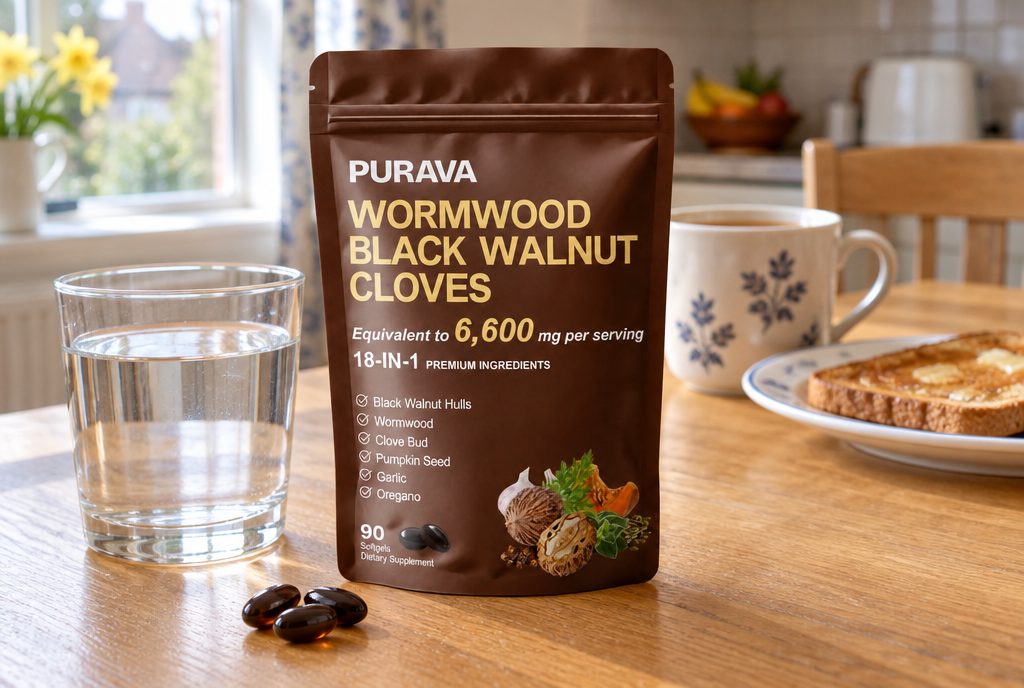
Picture tomorrow morning: three softgels and a cuppa. Then picture six o'clock four weeks from now, and your waistband still comfortable.
Day 1 to Day 30: Mum's Month, From the Calendar on Her Fridge
Mum kept notes on the kitchen calendar. This is her month.
Week one: more trips to the toilet. Things started moving.
Days 9 to 14: she saw them leave when she checked the bowl.
Week three: the swelling started coming down, even in the evenings.
Week four: her clothes fitted again, she slept through, and Dad noticed before she said a word.
Not everyone sees anything leave. Eggs and larvae are far too small to see, and what changes, you feel in your evenings. PURAVA says it has 56,000+ satisfied users.
Normal at 67 Is a Belly That Settles After Dinner
Here's what normal should look like at 67. You eat your dinner, and by bedtime it has settled. You sleep through.
Mum's weight never moved, so her waistline shouldn't have either. Two years of it was more than seven hundred evenings with the button undone. Seven hundred dinners they were fed first.
Five Questions Women Asked Me Before They Started
“Who shouldn't take it?”
It's a herbal supplement for adults, not a prescription medicine, and it isn't for everyone. Don't take it if you're pregnant or breastfeeding, under 18, have epilepsy, liver or bile duct disease or a ragweed or tree nut allergy, or if you take blood thinners. It contains walnut.
“I'm on reflux, blood pressure or thyroid tablets.”
Keep taking everything you've been prescribed. Mum did. Show your GP or pharmacist the pouch before you start; every ingredient is on the back.
“Isn't it too late at my age?”
Mum was 67. Her age was the reason she was told to live with it, not a reason it couldn't change.
“Will I feel worse before I feel better?”
Mum felt a bit flat around days four to seven and visited the toilet more often, so she drank more water. If anything worries you, stop and talk to your GP.
“What if I don't see anything come out?”
Eggs and larvae are too small to see. You'll know by your evenings, and if you don't, the sixty-day guarantee covers you.
Four Weeks Later, Mum Rang Me Before My First Coffee
It was the Saturday after her bowls club's spring dinner.
She had worn the fitted navy dress with the belt, done up on the last hole. Still flat when they cut the pavlova.
“I slept eleven till six,” she said. “Every night this week. Your father keeps asking what I've had done.”
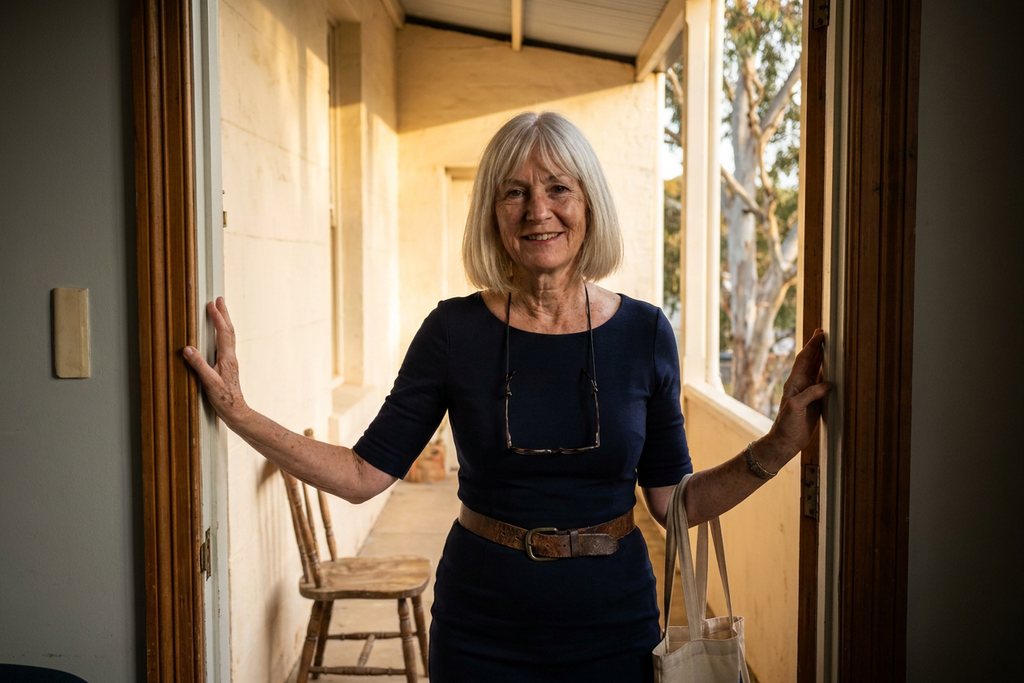
Then she said the thing I haven't stopped thinking about. “I wasn't making it up, was I?”
No, Mum. And neither are you.
So picture your own evenings, four weeks from now. A long lunch at your daughter's, dessert too, and nothing to loosen.
Christmas lunch in the heat, in something fitted, smiling for the camera. Your swimmers at the beach this summer, with nothing thrown over the top.
Tonight
Tonight you'll have dinner, and by six o'clock you'll feel it start. The waistband digging in, then the quiet loosening of the button when nobody's looking. Tomorrow someone may tell you, again, that it's your age.
For Mum, it never was. And a normal test was never the all-clear it was made out to be.
Tomorrow morning can be morning one of thirty.
Two Pouches, One Price, Charged One Time
PURAVA is sold through its own website. When I last checked, they were doing buy one, get one free, and they put it plainly: one pouch is A$69.99 and the second one is free, charged one time. Across two thirty-day protocols, that comes to under A$1.20 a day.
Mum gave the second pouch to Dad. Worming instructions here have long said to treat everyone in the house at the same time, and she wasn't taking chances.
If there are more of you at home, they also do buy two, get two free: four pouches for A$99.99.
Delivery is free, and there's no subscription.
The guarantee is the part I always read twice. Word for word, it says: “60-Day Money-Back Guarantee. Take the full 30-Day Protocol. If it does not work for you, we refund every penny. Keep the pouch.” There's nothing to post back.
Every evening you wait is one more evening with the button undone.
Picture waking up flat, and catching your reflection on the way to the kettle.
You have two choices tonight. Keep loosening the waistband and hearing that it's your age. Or start tomorrow morning, with sixty days to change your mind.
Picture the next family lunch, and nobody asking when you're due.
Mum wasn't imagining it, and neither are you. You knew. Now stop feeding what's feeding on you.
Leanne H.
References
- Centers for Disease Control and Prevention (CDC), Division of Parasitic Diseases and Malaria. DPDx, Laboratory Identification of Parasites of Public Health Concern: Stool Specimens, Specimen Collection. Laboratory guidance, not a study. CDC DPDx
- Tariq KA, Chishti MZ, Ahmad F, Shawl AS. Anthelmintic activity of extracts of Artemisia absinthium against ovine nematodes. Veterinary Parasitology, 2009;160(1-2):83-8. University of Kashmir, India. Study in sheep. Funding: not stated in the PubMed record. PubMed 19070963
- Beshay EVN. Therapeutic efficacy of Artemisia absinthium against Hymenolepis nana: in vitro and in vivo studies in comparison with the anthelmintic praziquantel. Journal of Helminthology, 2018;92(3):298-308. Menoufia University, Egypt. Study in mice and in the laboratory. Funding: not stated in the PubMed record. PubMed 28606189
- Pessoa LM, Morais SM, Bevilaqua CM, Luciano JH. Anthelmintic activity of essential oil of Ocimum gratissimum Linn. and eugenol against Haemonchus contortus. Veterinary Parasitology, 2002;109(1-2):59-63. Universidade Estadual do Ceará, Brazil. Laboratory egg-hatch test. Funding: not stated in the PubMed record. PubMed 12383625

Leanne H. has written about health and consumer affairs for Australian readers for 21 years. She is not a doctor or a health practitioner: she reads the studies, checks the labels and asks the question twice. She started this investigation for her mum.